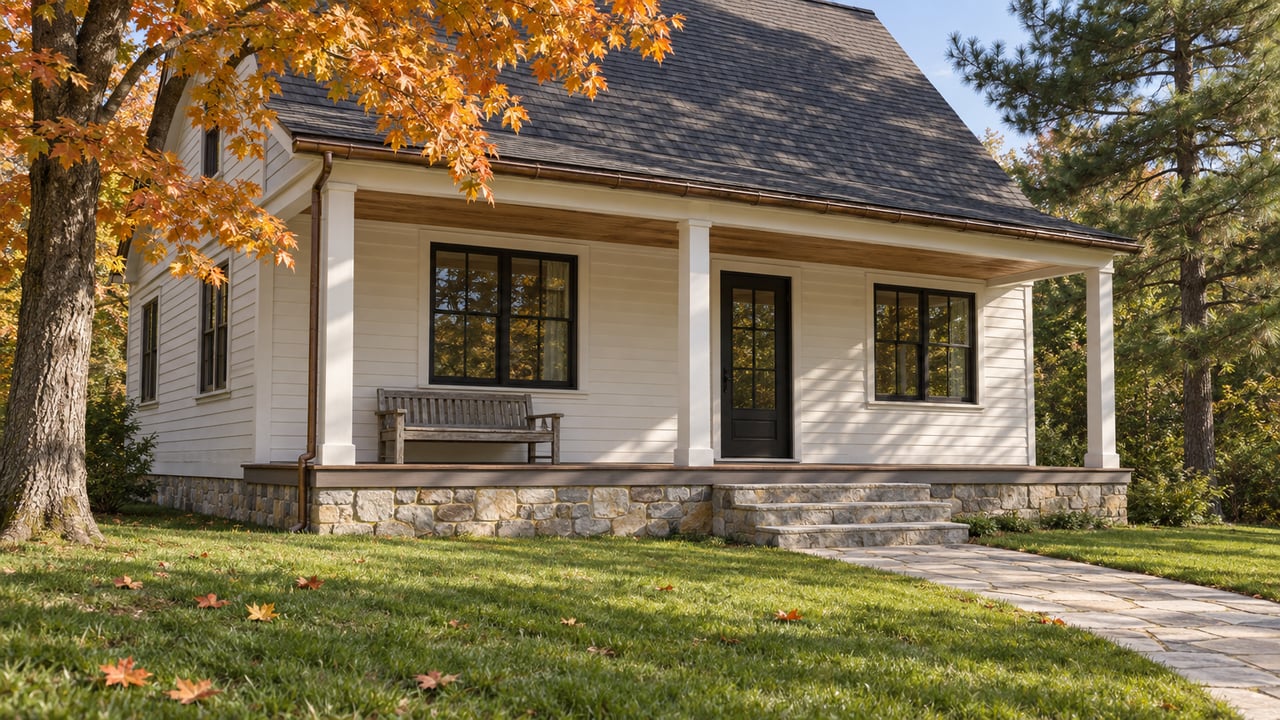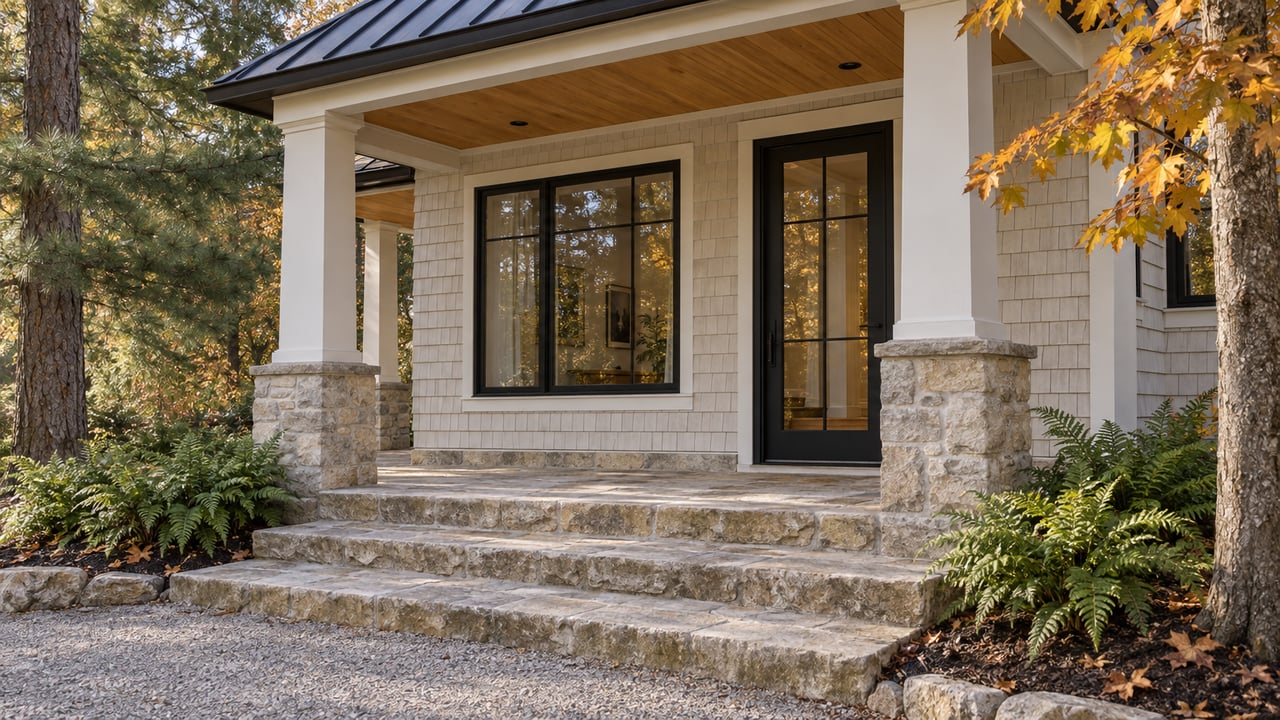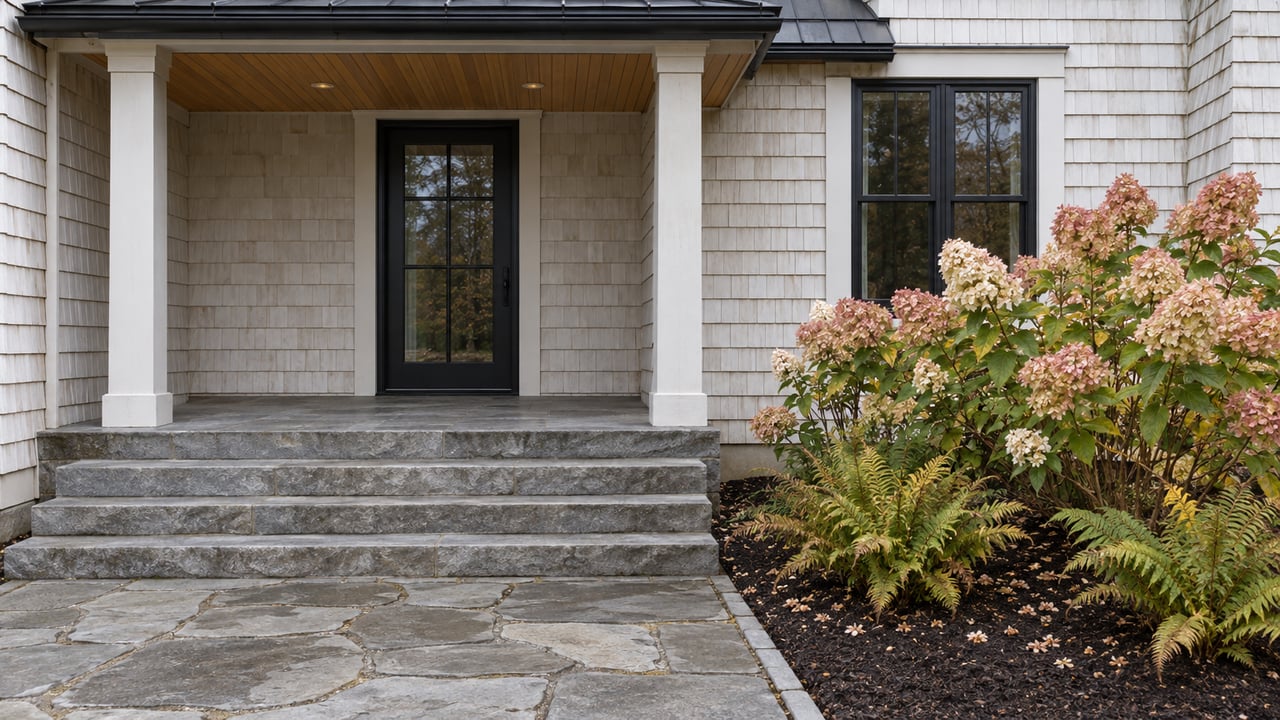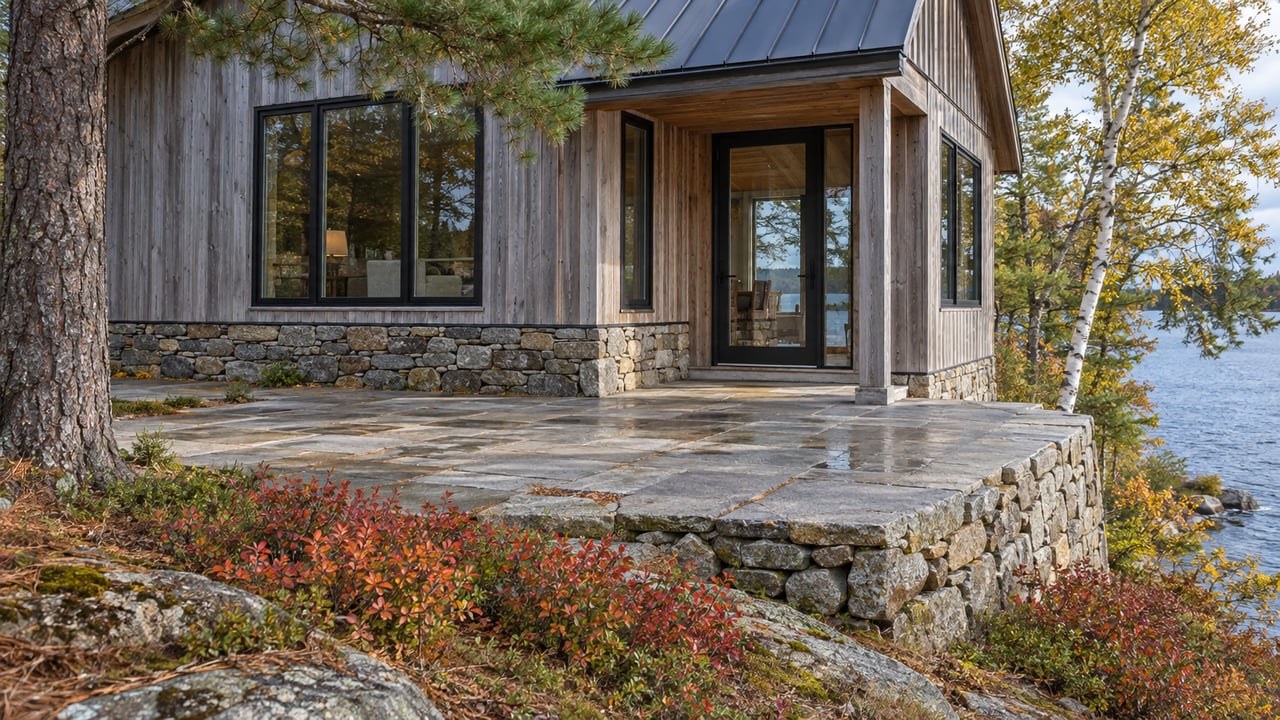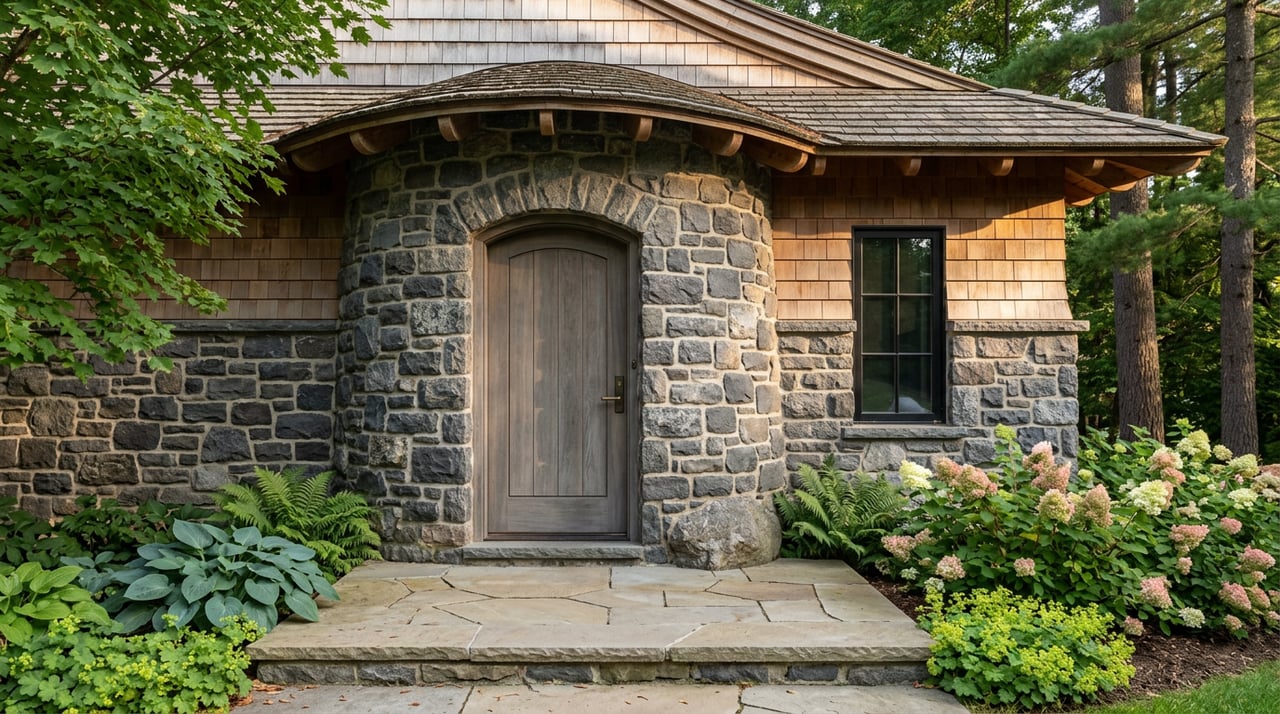
Say you've found the one. Maybe it's the low stone cottage at the corner of Clinton and Grant, the house with three-foot-thick boulder walls that Earl Young modeled after a button mushroom and that Charlevoix's own historical society calls his residential masterpiece. The official "Mushroom House" at the corner of Grant Street and Clinton Street is considered to be Earl Young's residential masterpiece. You write an offer. The seller accepts. Your lender orders an appraisal, the same routine step that happens on every financed purchase in Northern Michigan.
Then the appraisal comes back, and it doesn't match your contract price. Not because the house isn't worth what you offered. Because the appraiser has almost nothing to compare it to.
That's the part of buying one of these houses that doesn't show up in the magazine spreads or the vacation-rental listings. The obstacle isn't taste, and for most buyers drawn to Charlevoix's stone cottages, it isn't budget either. It's that Earl Young built these houses to be unrepeatable, and unrepeatable is exactly what a mortgage underwriter distrusts.
A comp desert by design
Earl A. Young was an American architectural designer, realtor, and insurance agent who, over a span of 52 years, designed and built 31 structures in Charlevoix, Michigan, but was never a registered architect, working mostly in stone using limestone, fieldstone, and boulders he found throughout Northern Michigan. The Charlevoix Historical Society's own count lands close to that same range, noting he would continue to build for the next fifty years, completing 26 residential and 4 commercial properties, most of which remain today. Sources vary slightly on the exact tally, but the range sits between roughly 28 and 31 structures total, built across five decades, and nearly all of them still standing as private homes.
That's the entire population. Not the entire inventory for sale this year. The entire population that has ever existed. In a normal Charlevoix transaction, an appraiser can pull five or six recent sales of similar homes within a half mile and adjust for square footage and lot size. For a Young house, there may be zero sales in the same style anywhere in the market in a given year, and the handful of past sales that do exist are scattered across decades with renovations, additions, and price swings that make direct comparison shaky at best.
This is exactly the scenario appraisal professionals describe as the hardest kind of assignment to price. Lack of comparable sales is the situation where the property is in a very unique area or is completely one-of-a-kind, and finding good comparables can be nearly impossible, so appraisers may rely more heavily on the cost approach or use more generalized data to estimate the home's value.
Why the cost approach doesn't solve it either
The fallback for a house with no comps is usually the cost approach: estimate what it would cost to rebuild the structure today, then subtract depreciation. The complexity in these appraisals stems from the unique characteristics of the property, the lack of readily available comparable sales data, or the existence of special legal or environmental considerations.
That fallback runs into a specific problem with Earl Young's houses. He didn't build from plans that a contractor could re-price today. As a designer, Young was enigmatic because he didn't use blueprints. He reportedly worked out each design on the ground, in the dirt, and let masons place boulders based on how they'd fit the site rather than following any drawing. There's no set of construction documents to run a materials takeoff against, and no modern crew builds three-foot boulder walls by eye anymore. The cost approach assumes you can price a rebuild. With these houses, you're pricing a craft that mostly left with the man who did it in 1975.
That difficulty compounds at higher price points generally. Appraisers who specialize in high-end properties note that two qualified appraisers evaluating the same $3M property might produce values that differ by $150,000 to $300,000. When the appraisal lands below the contract price, the math gets uncomfortable fast: Own Luxury Homes explains that a low appraisal creates a financing gap, because the lender will fund based on the lower of the purchase price or the appraised value. The buyer covers the difference in cash, renegotiates, or the deal falls apart at the finish line rather than at the offer stage.
The rule that actually decides whether the loan happens
None of this makes a mortgage impossible. Fannie Mae's own selling guide addresses exactly this category of property. Loans secured by unique or nontraditional types of housing, including, but not limited to, earth houses, geodesic domes, and log houses, are eligible for sale to Fannie Mae provided the appraiser has adequate information to develop a reliable opinion of market value. The guide also gives the appraiser more room than buyers might expect: it is not necessary for one or more of the comparable sales to be of the same design and appeal as the property that is being appraised, although appraisal accuracy is enhanced by using comparable sales that are the most similar to the subject property.
In practice, that shifts the burden onto the buyer's side of the table. Both the appraiser and the underwriter must independently determine whether there is sufficient information available to develop a reliable opinion of market value, and this depends on the extent of the differences between the unique property and more traditional houses in the neighborhood and how many similar properties have already sold there. The more documentation a buyer's agent can hand the appraiser before the report is due, past sale records, permit history, photographs of comparable renovations, the better the odds that report lands somewhere close to the number both sides already agreed to.
What a two-year price cut actually tells you
The clearest evidence of how this plays out in real time is the Thatch House, Earl Young's first Charlevoix build from 1918 and the origin point for the entire mushroom house style. Young's first-ever creation, known as the Thatch House, hit the market for $4.5 million in the summer of 2022. Nearly two years later, it was still on the market, this time listed at $2.8 million.
That's not a story about a house nobody wanted. It's a story about how long it takes a market with zero true comparables to find its own price. A conventional Charlevoix listing that sits unsold for two years and drops 38 percent off its ask would usually signal something wrong with the property. Here, it more likely signals that both buyers and appraisers had almost nothing to anchor a number to, and the price had to search for its level the slow way, through actual market feedback rather than comp-driven pricing from day one.
The bill that shows up after closing, not at it
Owning one of these houses carries its own maintenance reality, separate from financing. It is said that these are high maintenance houses, which require loving care and constant refurbishment. Stone, boulder chimneys, and in at least one case a hand-thatched roof shipped in from Europe don't behave like standard siding and asphalt shingles when it comes to insuring or repairing them. There's a small irony in this: the man who built these houses spent his working life as an insurance and real estate agent by trade. Anyone underwriting a policy on one of his houses today faces the same kind of unfamiliar-materials problem he sold policies against a century ago, just from the other side of the desk.
Expect insurance quotes to take longer than a standard homeowner's policy, and expect some carriers to ask for the same kind of documentation a lender wants: age of the roof, most recent masonry work, any known repairs to the boulder walls.
Foot traffic is changing, not disappearing
One more shift is worth knowing before you make an offer. As of June 2026, the organized walking tours are gone. As of June 9, 2026, the Charlevoix Historical Society no longer offers walking tours of Charlevoix's Earl Young houses. That ends a run of guided groups walking past these homes on a set schedule, something current owners have lived with for years.
It doesn't end tourist interest. Mushroom House Tours of Charlevoix, run by Edith Pair, still offers daily GEM car tours of 28 Earl Young houses, seven days a week during the tourist season. The traffic shifts from walking groups on a fixed route to a smaller, rolling GEM car tour, which for most owners means less foot-level attention on the sidewalk and more brief, vehicle-based pass-bys. It's a real change in the daily experience of owning one of these homes, just not the disappearance of interest a buyer might assume from the historical society's announcement alone.
What this means if you're the one writing the offer
A few things follow directly from all of this:
- Line up an appraiser with experience in unique or historic stone properties before you write the offer, not after the inspection period starts.
- Build your own documentation file early. Past sale prices, permit records, photos of comparable renovations elsewhere in the Young portfolio. The market won't hand an appraiser this file. Your agent should.
- Budget a cash cushion for a possible financing gap. Given the comp scarcity here, a low appraisal is a live possibility, not an edge case.
- Start insurance conversations before you're under contract deadline pressure. Specialty coverage for stone and thatch construction takes longer to quote than a standard policy.
- Treat time on market as information, not a red flag. A Young house that's been listed for a while may simply be waiting for the right combination of buyer and appraiser to agree on a number nobody else has had to agree on before.
A few questions worth answering before you write an offer
Can you get a conventional mortgage for a mushroom house? Generally yes. Fannie Mae's guidelines explicitly cover unique and nontraditional housing types, provided the appraiser can assemble enough information to support a reliable value. The process takes longer and asks more of your documentation than a standard purchase.
What should buyers know about the mushroom houses? The homes are privately owned and not open to interior tours, and the Charlevoix Historical Society maintains an Earl Young exhibit at the Harsha House Museum. Buyers should still expect strong local and visitor interest in any exterior changes.
Can you tour a mushroom house before buying it? Not the interior. The homes remain private residences. Exterior viewing continues through Edith Pair's daily GEM car tours during the season, and the historical society's walking tours ended as of June 2026.
If you're weighing one of Charlevoix's stone cottages against a more conventional lakefront listing, the conversation about financing and timeline is worth having early, not after you've already fallen for the house. Pat O'Brien has spent more than two decades working transactions across Charlevoix's in-town neighborhoods and its lakefront, and can walk you through what an offer on one of these homes actually looks like from contract to closing. Contact us when you're ready to talk specifics.
This article is general information, not legal, tax or financial advice. Consult a qualified professional about your situation.